One engine. A vertical is configuration, not a fork.
Who owns a row and what behaviour applies to it are two separate identifiers that never read each other. That is why one deployment can run a personal injury firm today and a second vertical tomorrow. We are starting with law.
company_type_idwhat behaviour applies → | Personal injury lawlive | Dermatologydefined, dormant | Next verticalrows, not a fork |
|---|---|---|---|
| Organization Aone owner | firm | practice | + |
| Organization Bone owner | firm | + | + |
organization_idwho owns the row ↑ |
Every missed intake is a case you never got.
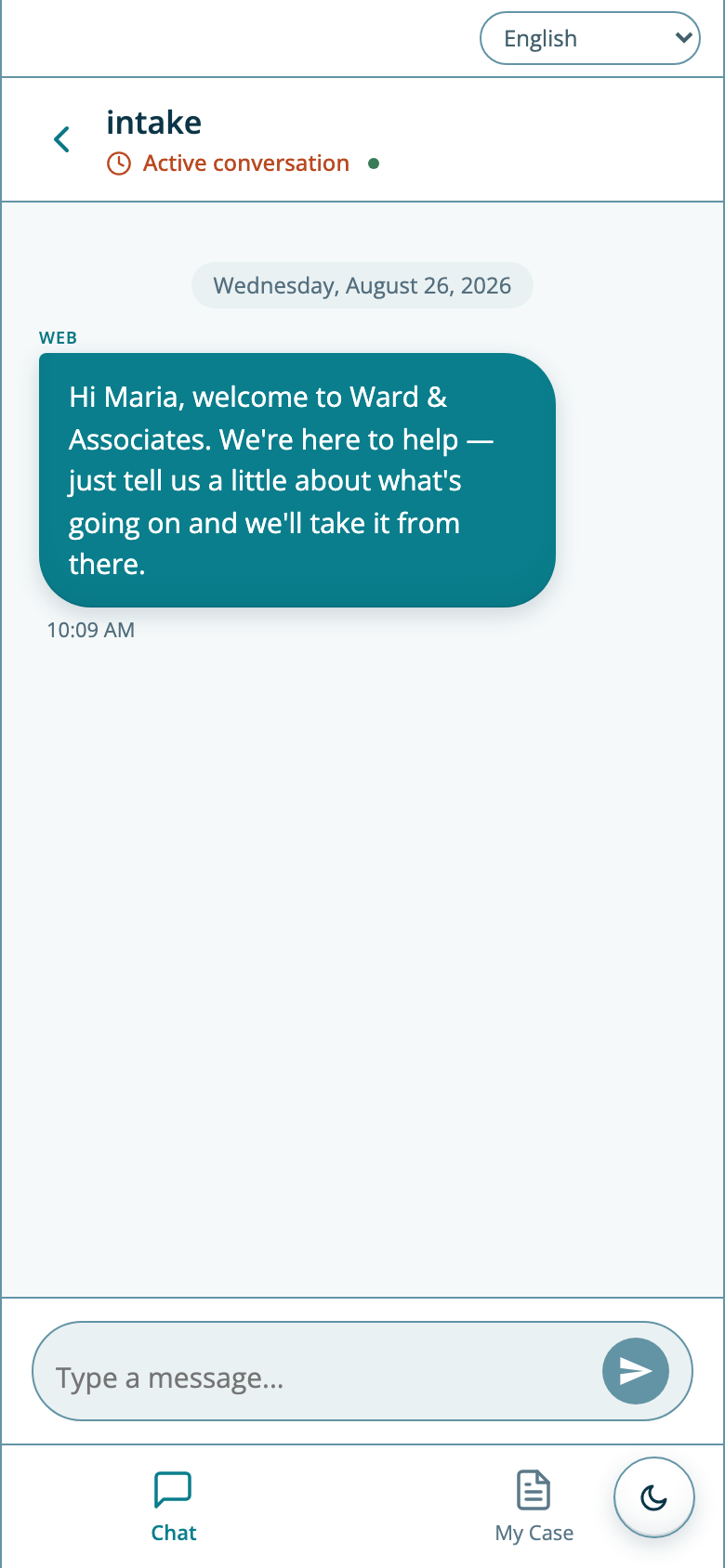
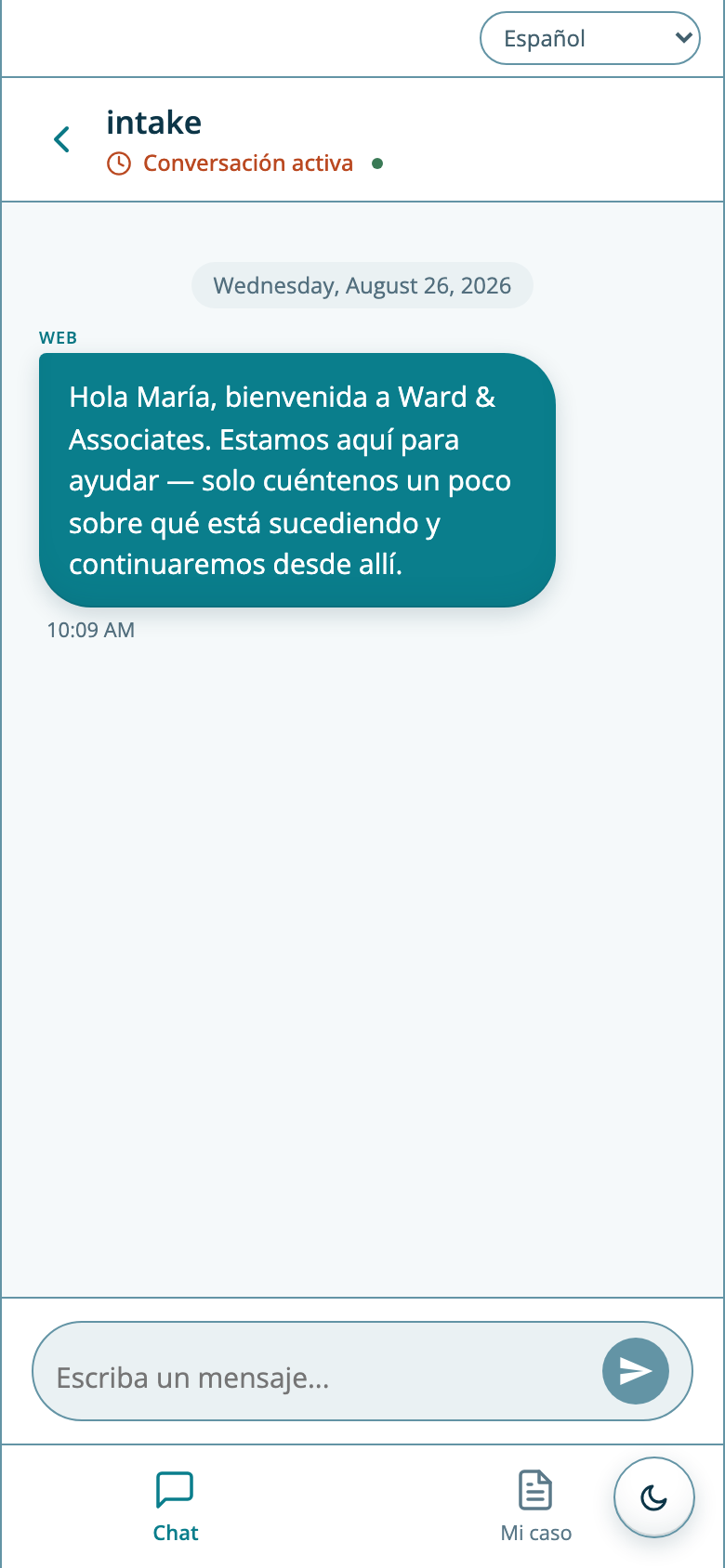
Adaptive answers the moment a prospect reaches out — 2 a.m., Sunday, in any of the ten most-spoken languages in the U.S. It asks your questions, in your order, and hands your team an organized record of what it gathered.
Immediate coverage, without the overhead.
Firms have had two options, and both of them cost something.
Staff a call center around the clock
Seats, training, scheduling, and the turnover that comes with night shifts. The coverage is real. So is the payroll line.
Cost: headcountLet after-hours inquiries wait until morning
The overhead disappears. So do the prospects who reached out at 2 a.m. and heard back from someone else first.
Cost: casesAdaptive is the third option.
Every inquiry engaged immediately, in the client's own language, running your questions and your process — at a fraction of what staffed coverage costs, and without adding headcount.
The prospect who waits is the prospect who leaves.
Most legal consumers hire the lawyer who answers first. The window is measured in minutes, and it opens whenever the accident happened — not whenever your office is staffed.
Three steps. Your team owns the third.
The prospect texts.
From your website, a Google or Meta ad, a QR code, or your existing number. Adaptive replies immediately — in the client's language, in your firm's voice.
Adaptive runs the intake.
Your questions, in your order, with purpose-built guardrails that hold the conversation to your process. A mobile link lets clients pick up where they left off.
Your team picks up an organized record.
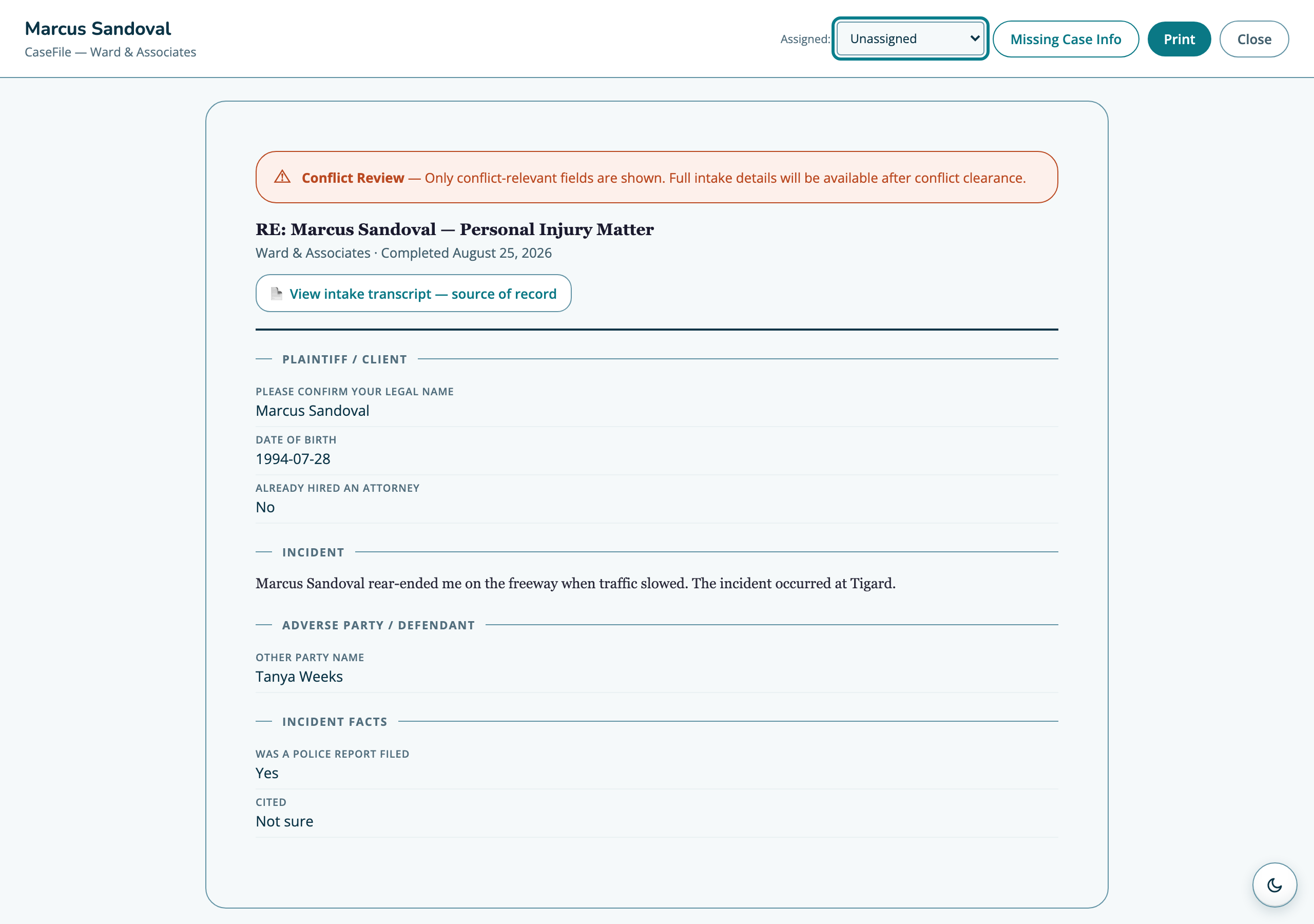
A structured record with documents attached, conflict review supported, and an internal case note in legal terms — so your staff starts by evaluating the case, not reconstructing it.
Your client explains what happened in the language they think in.
Intake runs in the ten most-spoken languages in the United States — not a translated form, a real conversation. No interpreter to schedule, no callback to arrange, no detail lost because someone was working in their second language at two in the morning.
- English
- Español
- 中文
- Tagalog
- Tiếng Việt
- العربية
- Français
- 한국어
- Русский
- Português
Built around your firm, and around your clients.
Intake
Instant response, 24/7
Every inquiry answered the moment it arrives, so opportunities aren't lost to whoever replied first.
Ten languages, fully supported
Intake in the ten most-spoken languages in the U.S., so clients explain what happened in the one they think in.
Your firm's voice
Look, tone, and questions tailored to your brand and practice — every interaction reads as you.
Guardrails by design
Purpose-built limits keep the conversation on your intake process, maximizing each conversation and minimizing misdirection.
Working the matter
Client document upload
Police reports, medical records, and photos come in through the conversation — the client shares the gathering.
E-signature into the file
Send DocuSign agreements from inside the chat; signed documents load straight into the case notes.
Proactive reminders
Adaptive chases the missing document and tracks how long it has been outstanding, so nothing quietly stalls.
Ongoing communication
One platform for continued follow-up with clients and prospects over the life of the matter.
Running the firm
Case lifecycle dashboard
Where every potential case stands, broken out by channel, geography, and time of interaction.
Performance analytics
Results by lead source, time to response, and time to decision — so you know which spend is working.
Referral consent and commissions
Consent captured and recorded at first contact, then tracked through to commission.
Conflict review and case notes
Conflict checks supported, with an internal note that summarizes the matter in legal terms.
Not a transcript. A file your team can evaluate.
Every conversation resolves into a structured record: the client's own account, the documents they sent, and an internal note in legal terms. Every fact traces to where it came from. Nothing is inferred, and nothing is invented.
Your questions, your order
The intake script is yours. Adaptive runs it — it doesn't write it.
Guardrails, not improvisation
The conversation stays inside your process. It gathers facts; it does not advise, evaluate, or make representations about the case.
An attorney decides every case
Adaptive gathers and organizes. Whether the firm takes the matter is a decision your team makes, on a record built for that decision.
Conflict review supported
Consent and party details are captured at first contact, so the conflict check happens before the relationship starts.
Pay for the intake, not for the seat.
The comparison firms actually make is per completed intake — what it costs to get one prospect's story captured, documented, and ready for a lawyer to read.
Fully loaded cost per completed intake, based on paralegal wage and benefit data.
BLS / NALA 2024Per completed intake, at any hour, in any of ten languages, with documents attached and the record delivered.
See it run on your own intake questions.
A 30-minute walkthrough configured with your firm's questions and practice areas — so you're watching your intake, not a generic demo.